
A SWOT analysis can be used by anyone, from students to business owners to evaluate a company. “But how do I create one?” I hear many of you asking. Well, you are in the right place! Today I will tell you how to create a SWOT analysis to create an effective framework for developing your business.
What is a SWOT Analysis?
As defined by Investopedia, the SWOT framework is “a realistic, fact-based, data-driven review of an organization. It helps define a company’s competitive position, assesses internal and external issues, and evaluates its current and future potential.”
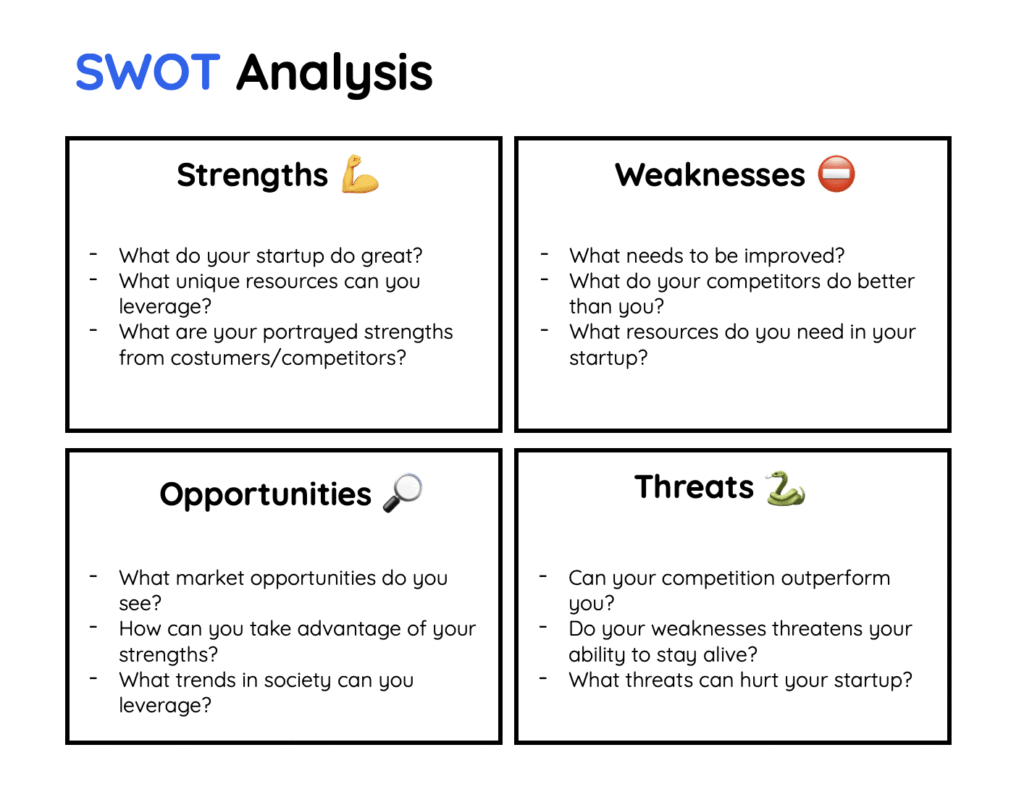
The SWOT framework is split into four sections: Strengths, Weaknesses, Opportunities, and Threats. I will define each section later on in this post, but the above graphic provides simple information about what each SWOT section should include.
Why Create a SWOT Analysis?
There are many benefits to using the SWOT framework, such as:
- Clarity/Organization
- Improving decision-making and communication
- Providing competitive insight
While this is not a comprehensive list, the SWOT framework proves to be a useful tool for a variety of cases.
How to Create a SWOT Analysis
First, it is important to define your objective. Depending on the type or size of the brand, you may want to do this with a team. The main thing to consider during this phase is the type of focus. Typically, your focus will either be internal, relating to how a company is run, or external, relating to how your brand fits into a specific market.
It is also strongly recommended to do some initial research on your brand’s target market. In short, you can use methods like customer feedback to discover what your target audience does and does not like.
Then Fill Out Each SWOT Segment
Typically, a SWOT analysis is in a chart form (similar to the one above). To get the best results, make sure to fill out each section completely!
Strengths
This portion addresses things like resources, capabilities, and general advantages that your brand currently has.
Weaknesses
In this section, you will want to detail potential areas that your brand could improve in.
Opportunities
This part of the analysis should consist of information like emerging trends/technology and potential market gaps or opportunities.
Threats
This segment should detail information like potential competition, market challenges, or regulations that could prevent your company from success.
Take Action
Once completed, it is important to draw insights from the SWOT analysis. Essentially try to figure out what you can do with the information you gathered. If you are having trouble with this, try to ask, “What can we learn from this?”
It is also important to relate your company’s strengths to potential market opportunities, while finding ways to minimize weaknesses and threats.
If any of these terms are confusing, this post provides a glossary of words that are commonly used in the field of market research!
Tips & Best Practices
Here are some additional tips and best practices for getting the best results from your SWOT analysis.
First, and most important, remember to ground your analysis in reliable data. Using reliable data in a SWOT analysis—or any professional marketing strategy—allows you to draw reliable conclusions about your brand’s place in a specific market. In this post, I talk more generally about the importance of using reliable data in professional settings.
Also remember to keep it collaborative! This step is much easier for a larger brand, but make sure to actively involve your customers and staff’s opinions into the SWOT analysis. These valuable insights can provide more balanced feedback on the various aspect of your brand.
Lastly, remember to be specific. Being too vague in your SWOT analysis can make your analysis useless for creating a specific plan.
Conclusion
Completing a SWOT analysis for your brand is an extremely important and easy method for evaluating how your brand compares to competitors. While easy to forget, it is important to include feedback from consumers and staff into your analysis for a balanced view of your company.